
Designing Inclusive Homes For Yorkshire Winters: Light, Warmth, And Wellbeing

Image credit: Sixteen Miles Out via Unsplash
As the days shorten across Leeds, York, and Harrogate, many homes feel a little dimmer and a little busier. Our mission at Nest and Flourish Interiors is to create inclusive spaces that nurture dignity and ease, even in the depths of winter.
I design with wellbeing at the centre so your home supports every member of the household, from small children to grandparents, and especially those with sensory sensitivities. Thoughtful choices about light flow, gentle transitions, and breathable materials can make winter feel calmer, safer, and more comfortable without a full renovation.
I return to three guiding principles each winter season:
Maximise and soften light to lift mood and visibility.
Build warmth through layers, texture, and smart thermal choices.
Keep pathways generous and navigation intuitive so that added textiles and furniture do not interrupt accessibility.
When these come together, you feel held by your home instead of hemmed in by it.
A recent client said, “Kim transformed our family room into a sanctuary where everyone feels included and at ease, it is truly changed how we live.” That kind of feedback keeps me focused on the small, human details that make winter living kinder.
So how can you make your home feel brighter, without a full renovation?
Start with daylight…
In winter, you want to gather every free lumen:
Clean glazing inside and out
Trim exterior foliage that blocks low sun angles
At the window, choose layered treatments that control glare, while protecting privacy and heat. My go-to combination is a sheer, wide weave voilé for daytime, plus a lined curtain or insulated Roman blind for night.
Hang curtains high and wide to expose as much glass as possible when open.
If you have deep reveals, adding a soft white shade to the recess can help to bounce light deeper into the room.
Use mirrors sparingly and purposefully. A single large mirror placed adjacent to a window can reflect soft sky light across an entire wall. Avoid direct mirror to sun alignment which can cause glare.
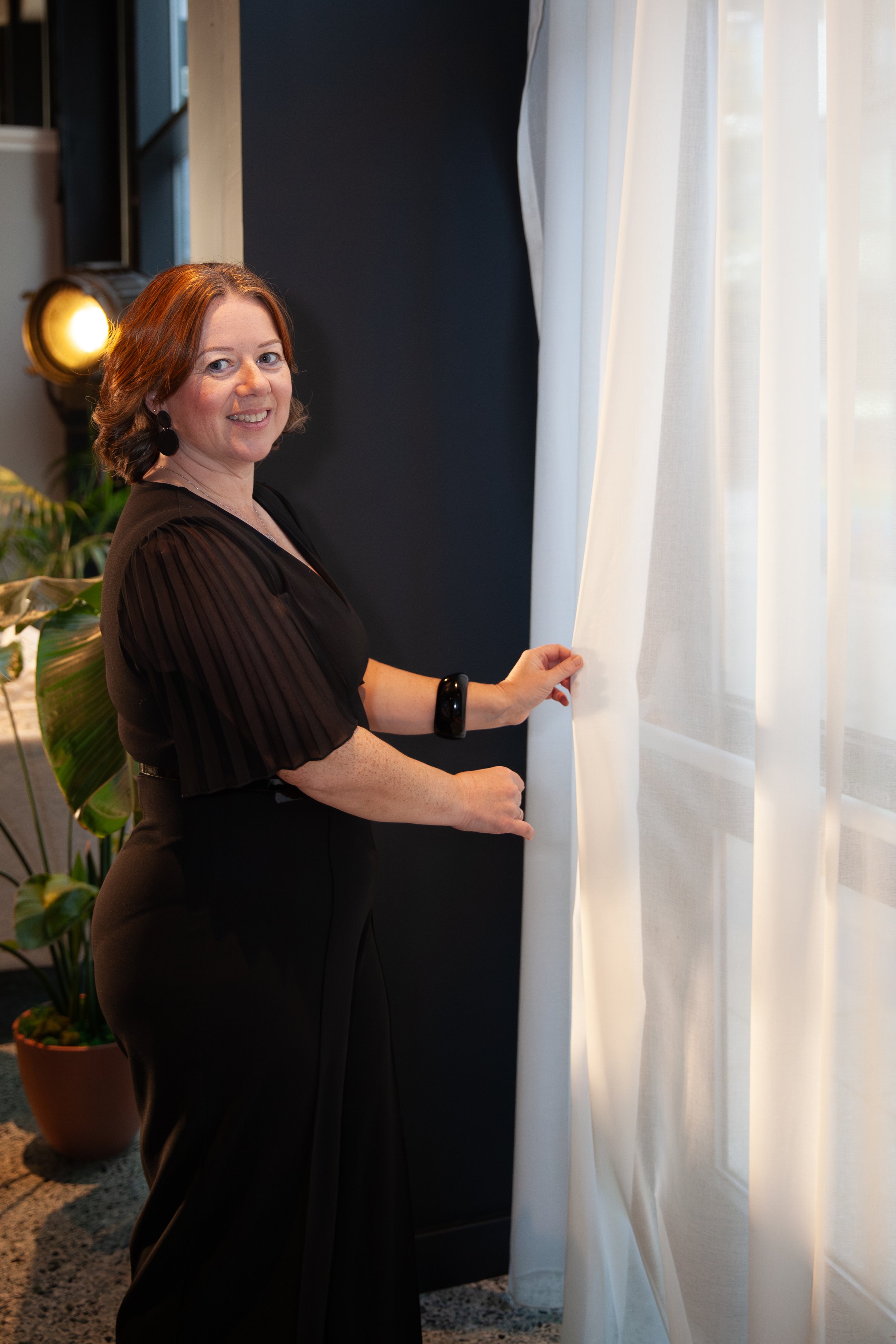
Layering sheers with curtains or blinds at windows helps to add warmth, texture and light control.
Layer lighting for comfort and accessibility…
Good winter lighting is not about one bright ceiling fitting. It is about layered control. I build three layers that you can adapt throughout the day:
Ambient lighting: Even, glare-free illumination that supports safe movement. That might include dimmable downlights with wide beam angles, plug in uplighters that graze the ceiling, or cove lighting that creates a soft, diffused glow. At stairs, continuous low level step lights improve depth perception and independence.
Task lighting: Focused light for reading, food prep, hobbies, and homework. Use adjustable table or floor lamps with warm LED bulbs near seating, and under cabinet strips in kitchens. Keep switches and controls consistent and reachable from seated and standing positions.
Accent lighting: Gentle pools of light for calm and orientation. Picture lights, small wall lights, and lit shelves reduce contrast and help the eye travel comfortably, which is especially helpful for neurodivergent family members who are sensitive to high contrast scenes.
As you move through your home think about how the light levels change from space to space - gentle transitions between light levels help to make spaces feel coherent and safe.
Build warmth through textiles…
Warmth is not only a thermostat setting. It is the feeling of enclosure, texture, and control:
Start underfoot. If you have hard floors, add a natural fibre rug with a thermal underlay to cut heat loss and soften acoustics.
Layer throws and cushions in breathable wool, organic cotton, or recycled blends so bodies warm up faster without blasting heating.
Edit colour with care - Warm neutrals with a touch of pigment, think oatmeal, clay, or linen grey, help rooms feel cosy without swallowing light.
Seal small drafts before considering major works. Add brush seals to letterboxes, fit compressible seals around doors, and use lined curtains over the chilliest panes. If you can, fit thermal interlining to existing curtains for a big boost at modest cost.

Layering throws in warm neutrals adds warmth and comfort without swallowing light. Image credit: Dan Gold via Unsplash
Keep pathways clear and safe when adding winter layers…
When rooms fill with extra textiles and furniture, movement can suffer. To keep your home both comfortable and easy to move through, consider the following:
Map primary routes from sofa to kitchen, sofa to loo, and bed to hallway. Aim for a clear width of at least 900 millimetres, more if mobility aids are used.
Use rounded corners where possible and choose compact side tables with open bases that tuck under seats.
Cable management matters - use floor cord covers that are flush, and route lamps along walls. Place task lights where they do not cross walkways.
On stairs and split levels, maintain consistent nosing visibility with a subtle contrast strip, and ensure handrails are continuous.
Rugs need anchoring. Choose a size large enough that front legs of sofas and chairs sit on the rug, then add a high friction underlay to prevent creep. Avoid small scatter rugs in circulation zones, especially near thresholds.
A few thoughtful adjustments can make the whole space feel calmer, safer, and more accessible.
Ready to prepare your home for winter together?
If you are in Leeds, York, or Harrogate and would like a clear plan for brighter days, warmer evenings, and safer circulation, I would love to help. I offer consultations that focus on winter specific improvements, from window treatments to lighting schemes and breathable materials, so you can make meaningful changes without overspending. You can also explore how we create bespoke interior designs that balance comfort and sustainability year round.
Summary of key steps:
Capture daylight with layered window treatments and reflective reveals.
Build a three layer lighting scheme with warm, dimmable LEDs and clear controls.
Zone open plan rooms for heat and calm, and seal drafts before big spends.
Keep pathways generous, manage cables, and anchor rugs for safety.
When your home is inclusive and attuned to winter, you notice it in the small moments, easier mornings, calmer evenings, and more energy for the people you love. Let us help you map those changes with a personalised consultation tailored to your home and your season.

A Design Decisions personalised consultation can help you to create a welcoming space during winter without renovating.
Nest and Flourish Interiors, founded by interior designer and former nurse Kim Heslip, specialises in creating beautiful, accessible, and inclusive spaces that promote dignity, independence, and wellbeing.
With 20 years of nursing experience, Kim understands the transformative power of supportive environments and designs homes and workspaces that promote long term health and wellbeing, and cater to health needs, disabilities, and different neurotypes.
Based in Yorkshire, Nest and Flourish Interiors provides tailored, one-to-one design services across Leeds, York, Harrogate, and beyond.
Contact Kim to discover how she can help you create a thoughtfully designed space that works for everyone who uses it.